
Looking for xanthelasma removal in Mira Road? SkinHealth by Dr. Safa Patrick provides dermatologist-led evaluation and treatment for xanthelasma, including suitable removal procedures based on the size, location and characteristics of the lesion.
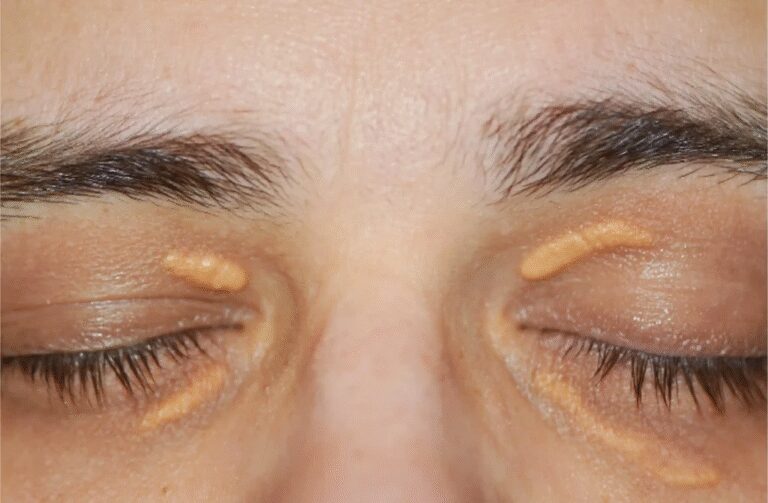
Xanthelasma appears as soft, yellowish plaques or deposits, most commonly around the eyelids. Although xanthelasma is usually benign, it can be cosmetically concerning and may sometimes be associated with abnormal cholesterol or lipid levels.
A dermatologist can assess the lesion and discuss whether removal is appropriate.
What Is Xanthelasma?
Xanthelasma is a type of yellowish plaque that commonly develops around the eyelids, particularly near the inner corners.
It is usually benign and may appear as:
- Yellow or yellowish-white patches
- Flat or slightly raised plaques
- Lesions around the upper or lower eyelids
- Single or multiple deposits
- Gradually enlarging areas around the eyes
Xanthelasma is not usually painful, but many people seek treatment because of its appearance.

What Causes Xanthelasma?
Xanthelasma consists primarily of lipid-containing cells within the skin.
It can occur in people with normal cholesterol levels, but it may also be associated with:
- High cholesterol
- Abnormal lipid levels
- Certain metabolic conditions
- Family history
- Increasing age
Because of this association, your doctor may recommend checking your lipid profile or discussing cardiovascular risk factors when appropriate.
Is Xanthelasma Dangerous?
Xanthelasma is generally considered a benign skin condition.
However, a yellowish lesion around the eyelid should be properly evaluated because not every eyelid lesion is xanthelasma.
A dermatologist can examine the lesion and determine whether it is consistent with xanthelasma or another condition.
Xanthelasma Removal in Mira Road
Treatment depends on the size, depth, location and number of lesions.
Possible treatment approaches may include:
Surgical Excision
Surgical excision involves carefully removing the xanthelasma tissue.
It may be considered for selected lesions, particularly when complete removal is appropriate based on the clinical assessment.
Electrosurgery / Electrocautery
Selected superficial lesions may be treated using controlled electrical energy.
Suitability depends on the lesion and its location, particularly because the eyelid is a delicate anatomical area.
Laser Treatment
Certain xanthelasma lesions may be considered for laser-based treatment depending on their characteristics and the dermatologist's assessment.
Laser treatment is not appropriate for every lesion.
How Is Xanthelasma Surgery Performed?
The exact procedure depends on the selected treatment.
A typical treatment pathway may involve:
1. Dermatological assessment
The lesion is examined to confirm whether it appears consistent with xanthelasma.
2. Treatment planning
The dermatologist considers the size, depth, location and number of lesions.
3. Local anaesthesia when required
A suitable local anaesthetic may be used to make the procedure more comfortable.
4. Lesion treatment or removal
The selected procedure is performed carefully around the delicate eyelid area.
5. Wound care and aftercare
You receive instructions regarding wound care, skincare and follow-up.
Is Xanthelasma Removal Painful?
When a procedure requires local anaesthesia, the treatment area is numbed beforehand.
You may experience a brief stinging sensation from the anaesthetic injection. Some tenderness, swelling or redness may occur after treatment depending on the procedure performed.
Xanthelasma Surgery Recovery
Recovery depends on the treatment method, lesion size and location.
After the procedure, you may experience temporary:
- Redness
- Swelling
- Tenderness
- Crusting
- Changes in skin colour
Your dermatologist will provide specific aftercare instructions and advise you about follow-up.
Because xanthelasma commonly occurs around the eyes, following post-procedure instructions carefully is particularly important.
Can Xanthelasma Come Back After Removal?
Yes. Xanthelasma can recur after treatment.
Removal treats the existing lesion but does not necessarily eliminate the underlying tendency to develop xanthelasma.
If you have abnormal cholesterol or other metabolic risk factors, addressing them with your physician may be appropriate.
Should I Check My Cholesterol If I Have Xanthelasma?
It can be reasonable to discuss a lipid profile with your doctor because xanthelasma may be associated with abnormal lipid levels.
However, xanthelasma can also occur in people whose cholesterol levels are normal.
Your doctor can determine whether lipid testing or additional evaluation is appropriate.
Can Xanthelasma Be Removed Permanently?
No removal method can guarantee that xanthelasma will never return.
The treated lesion may be removed or reduced, but recurrence can occur.
The likelihood of recurrence can depend on factors including the lesion characteristics, treatment method and individual tendency to develop xanthelasma.
Xanthelasma vs Milia
Xanthelasma and milia are different conditions.
Xanthelasma typically appears as yellowish plaques around the eyelids and is associated with lipid accumulation in the skin.
Milia are small, white or skin-coloured keratin-filled cysts that commonly appear around the eyes and face.
Because several eyelid lesions can look similar, professional examination is useful before treatment.
Why Choose SkinHealth for Xanthelasma Treatment in Mira Road?
At SkinHealth, xanthelasma is evaluated as a dermatological condition before selecting a removal procedure.
Dr. Safa Patrick assesses the lesion and considers factors such as:
- Location around the eyelid
- Size and number of lesions
- Depth and appearance
- Previous treatment
- Skin type
- Medical history
- Potential lipid abnormalities
The appropriate removal technique is selected according to the individual lesion rather than using the same procedure for every patient.
Frequently Asked Questions About Xanthelasma
Book a Xanthelasma Consultation in Mira Road
If you have yellowish patches or plaques around your eyelids, consult a dermatologist before attempting to remove them yourself.
Dr. Safa Patrick can assess the lesion, discuss appropriate xanthelasma removal options in Mira Road, and advise whether lipid evaluation or other medical assessment may be appropriate.
Book a consultation at SkinHealth in Mira Road for xanthelasma evaluation and treatment.