
Have you noticed a small lump beneath your skin that is growing, becoming painful or repeatedly filling with fluid-like or thick material? It may be a skin cyst, although other skin conditions can cause similar lumps.
At SkinHealth Clinic in Mira Road, Dr. Safa Patrick provides dermatologist-led evaluation of skin lumps and discusses appropriate treatment options based on the diagnosis, size, location and symptoms.
If you are searching for cyst excision in Mira Road or skin cyst removal in Mumbai, an accurate diagnosis is the first step towards deciding whether the cyst needs treatment or can be safely monitored.
What Is a Skin Cyst?
A skin cyst is a closed sac beneath or within the skin that may contain keratin or other material. Epidermoid cysts are among the common types and often appear as round, slow-growing lumps on the face, neck or body.
Some cysts remain small and painless, while others may enlarge, become inflamed, rupture or develop an infection.
Not every skin lump is a cyst. A dermatologist can examine the lump and determine whether further investigation or removal is appropriate.
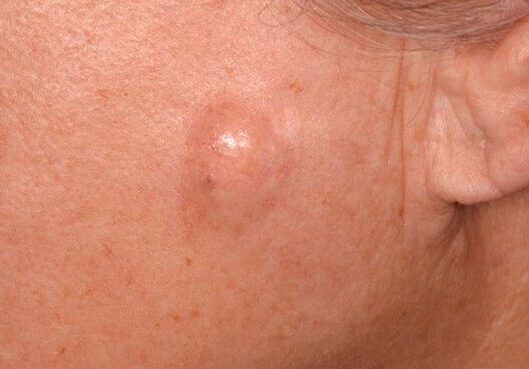
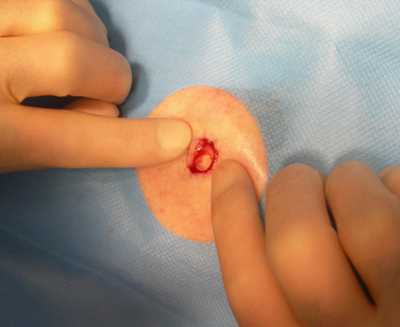
When Is Cyst Excision Recommended?
Cyst removal may be considered when a cyst:
- Becomes painful or uncomfortable.
- Increases in size.
- Repeatedly becomes inflamed or drains.
- Interferes with daily activities.
- Is located where clothing or movement repeatedly irritates it.
- Causes cosmetic concern.
- Requires removal for diagnostic assessment.
A small, uncomplicated cyst that is not causing symptoms may not need immediate treatment. The decision depends on the clinical examination and your preferences.
What Is Cyst Excision?
Cyst excision is a minor surgical procedure in which a clinician removes the cyst. For many epidermoid cysts, removing the cyst wall as completely as possible helps reduce the chance of recurrence.
The procedure may involve:
- Clinical assessment: The cyst is examined to assess its size, location, symptoms and likely type.
- Preparation: The area is cleaned, and local anaesthesia may be used to numb the treatment site.
- Removal: The clinician makes an appropriate incision and removes the cyst using a technique suited to the individual case.
- Wound closure: Depending on the size and location, the wound may be closed with stitches or managed using another appropriate method.
- Aftercare: Instructions are provided for wound care, activity and follow-up.
The exact technique depends on the cyst and its condition. Not every lump is suitable for the same procedure.
Cyst Excision vs. Incision and Drainage
Cyst excision and incision and drainage are different procedures.
Cyst excision: The aim is to remove the cyst wall and its contents. Complete removal of the wall can reduce recurrence.
Incision and drainage: The clinician opens the cyst to release its contents. This may be useful for certain inflamed or infected cysts, but the cyst wall may remain, allowing the cyst to return.
If a cyst is acutely inflamed, definitive excision may need to be postponed until the inflammation settles. Your clinician can advise on the appropriate timing.
Is Cyst Excision Painful?
Local anaesthesia is commonly used for minor cyst excision, helping numb the treatment area during the procedure. You may experience some pressure during treatment and temporary tenderness afterward.
The level of discomfort depends on the cyst's size, location and inflammation. Your clinician can explain what to expect before the procedure.
What Is the Recovery Time After Cyst Removal?
Recovery varies according to the cyst's size, the area treated, the removal technique and whether stitches are required.
After the procedure:
- Follow the wound-care instructions provided.
- Keep the area protected as advised.
- Avoid unnecessary pressure, friction or stretching of the wound.
- Attend follow-up appointments if recommended.
- Seek medical advice if pain, redness, swelling or discharge worsens.
Your clinician will advise when normal activities can be resumed and whether stitches need to be removed.
Will Cyst Excision Leave a Scar?
Any procedure that cuts through the skin can leave a scar. Its appearance depends on factors such as the cyst's size, location, wound healing and individual tendency to develop raised scars.
Your clinician can discuss scar expectations before treatment. Complete removal may reduce the likelihood of the cyst returning, but it does not guarantee scar-free healing.
Can a Skin Cyst Come Back After Removal?
Yes, recurrence is possible. The likelihood depends on the type of cyst, the removal technique and whether the entire cyst wall was removed.
Simply draining a cyst may relieve pressure but does not necessarily remove the structure responsible for its formation. If a lump returns at the same site, it should be reassessed.
Should You Remove a Cyst at Home?
No. Do not squeeze, puncture or attempt to cut out a cyst yourself. Doing so may cause inflammation, bleeding, infection, scarring or rupture of the cyst wall.
A painful, red or rapidly enlarging lump should be assessed by a healthcare professional rather than treated with home extraction methods.
When Should You See a Dermatologist?
Arrange a medical assessment if you notice a new or changing skin lump, particularly if it:
- Grows quickly.
- Becomes painful, red or warm.
- Starts draining fluid or pus.
- Repeatedly returns after drainage.
- Develops an ulcer or unusual surface changes.
- Is accompanied by fever or spreading redness.
Seek prompt medical attention for rapidly worsening pain, spreading redness, fever or other signs of a significant infection.
Consult Dr. Safa Patrick for Cyst Excision in Mira Road
If you are searching for cyst removal in Mira Road or Mumbai, consult Dr. Safa Patrick at SkinHealth Clinic for an assessment of your skin lump and discussion of suitable treatment options.
The recommended approach depends on the type of cyst, its location, symptoms and individual medical history.
Book a consultation at SkinHealth Clinic to discuss your skin cyst and whether removal is appropriate.
Reach Our Clinic
SkinHealth by Dr. Safa Patrick
Shop No. 1, Aakruti Elegance,
Above UCO Bank, Ramdev Park,
Mira Road East, Mumbai – 401107.
Phone: +91 79778 64622
Clinic hours: Monday–Saturday, 12 PM–9 PM, subject to confirmation.