
Looking for urticaria treatment in Mira Road or an allergy treatment in Mira Road? SkinHealth by Dr. Safa Patrick provides dermatologist-led evaluation and treatment for hives, itching, skin rashes and allergic skin reactions.
Urticaria, commonly known as hives, can cause sudden itchy, raised patches or welts on the skin. These may appear on different parts of the body and can sometimes disappear and reappear within hours.
The cause of urticaria is not always obvious. A dermatologist can assess your symptoms, identify possible triggers and recommend appropriate treatment based on whether the condition is acute or persistent.
What Is Urticaria?
Urticaria is a skin condition commonly known as hives. It causes raised, itchy welts that can vary in size and may appear anywhere on the body.
Individual hives often change location and may disappear within hours, while new ones can develop elsewhere.
Urticaria may be associated with:
- Food or medication reactions
- Infections
- Insect bites or stings
- Heat or cold
- Pressure or friction on the skin
- Exercise or sweating
- Stress in some individuals
- Other physical triggers
- Sometimes, no identifiable trigger
Urticaria is not always caused by an allergy, which is why proper medical evaluation can be important.

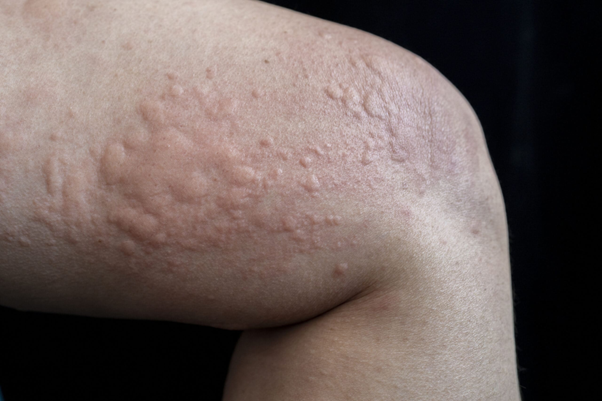
Common Symptoms of Hives
Common symptoms of hives include:
- Raised red or skin-coloured welts
- Intense itching
- Swelling of the affected skin
- Welts that change shape or location
- Individual hives that fade and reappear
- Swelling around the eyes or lips in some cases
- Burning or stinging sensation in some people
If swelling involves the lips, tongue or throat, or if you experience difficulty breathing, dizziness or fainting, seek emergency medical care immediately.
Acute and Chronic Urticaria
Urticaria can broadly be classified based on how long it persists.
Acute urticaria generally lasts for a shorter period and may be associated with an infection, medication, food, insect exposure or another identifiable trigger.
When hives continue or recur for more than six weeks, the condition is generally considered chronic urticaria.
Chronic urticaria may not have an obvious external trigger. Some cases may be associated with autoimmune mechanisms or other underlying factors.
A dermatologist can help determine the appropriate evaluation and management approach.
Urticaria Treatment and Trigger Assessment
Treatment depends on the type of urticaria, severity, duration, possible triggers and your medical history.
A dermatologist may recommend:
Non-sedating antihistamines are commonly used to control itching and hives. The medication and dosage should be determined according to your individual condition and medical history.
Your dermatologist may ask about:
- Recent foods
- New medications
- Infections
- Insect exposure
- Heat or cold
- Exercise
- Pressure on the skin
- Personal and family medical history
Not every patient requires extensive allergy testing.
Persistent or chronic urticaria may require a structured treatment plan and follow-up. If standard treatment does not adequately control symptoms, a dermatologist may consider other evidence-based treatment options depending on the patient's condition.
Allergy-Like Skin Rashes
Many people search for allergy treatment in Mira Road when they develop itching, rashes, swelling or hives.
However, not every itchy rash is an allergy.
Conditions that can resemble an allergic skin reaction include:
- Urticaria
- Eczema
- Contact dermatitis
- Drug eruptions
- Insect-bite reactions
- Viral rashes
- Other inflammatory skin conditions
A dermatologist can examine the rash and determine whether it is consistent with urticaria or another skin condition.
When to See a Dermatologist for Hives
Consider consulting a dermatologist if:
- Hives keep coming back
- Itching is affecting sleep or daily activities
- You cannot identify the trigger
- Symptoms persist or recur for several weeks
- You develop repeated episodes of swelling
- Over-the-counter treatment is not controlling symptoms
- You are experiencing a new or unexplained rash
- You suspect a medication or food reaction
For persistent symptoms, identifying the pattern and duration of the hives can help your dermatologist determine the next steps.
Urticaria and Angioedema
Some people with urticaria may also develop angioedema, which is deeper swelling beneath the skin.
It may affect areas such as:
- Lips
- Eyelids
- Face
- Hands
- Feet
Angioedema involving the tongue or throat can be an emergency, particularly when associated with breathing difficulty.
Is Urticaria Always an Allergy?
Not necessarily.
Urticaria can occur because of an allergic reaction, but hives can also occur through non-allergic mechanisms. Chronic spontaneous urticaria, for example, may occur without an identifiable external allergen.
This is why simply avoiding foods or products without proper evaluation may not identify the actual cause.
Diagnosis of Urticaria
Diagnosis is primarily based on your medical history and examination of the skin.
Your dermatologist may ask:
- When did the hives begin?
- How long does each individual hive last?
- Do the hives move from one area to another?
- Are they associated with swelling?
- Have you started any new medications?
- Have you recently had an infection?
- Are there food, temperature, pressure or exercise-related triggers?
- Have you experienced similar episodes previously?
Additional investigations may be recommended when clinically appropriate.
Why Choose SkinHealth for Urticaria Treatment?
At SkinHealth, urticaria is evaluated as a medical dermatological condition rather than simply treating every rash as an allergy.
Dr. Safa Patrick provides dermatologist-led evaluation for skin allergies, hives, itching, rashes and related dermatological concerns.
Your treatment plan may depend on:
- Type and duration of urticaria
- Symptom severity
- Possible triggers
- Associated swelling
- Previous treatments
- Medical history
- Response to treatment
Frequently Asked Questions About Urticaria
Book a Urticaria Consultation in Mira Road
If you are experiencing recurrent hives, unexplained itching, swelling or an allergic-looking skin rash, consult a dermatologist for proper evaluation.
Dr. Safa Patrick at SkinHealth provides dermatology consultation for urticaria and allergy-related skin concerns in Mira Road.
Book a consultation to discuss your symptoms and receive a personalized treatment plan.