
Looking for professional ear piercing in Mira Road for yourself or your child? Choosing an experienced provider, appropriate sterile equipment and suitable jewellery is important for reducing the risk of infection and other complications.
At SkinHealth Clinic in Mira Road, you can enquire about ear piercing services, hygiene procedures and aftercare guidance. The procedure and suitability should be discussed before booking, particularly for young children or people with a history of metal allergies, keloids or healing problems.
Whether you are considering a first ear piercing or an additional earlobe piercing, proper preparation and aftercare can support healing.
Why Choose Ear Piercing at SkinHealth?
- Hygiene-focused procedures: Appropriate cleaning, hand hygiene and sterile equipment are important considerations.
- Professional guidance: Understand the procedure, jewellery options, possible risks and aftercare before proceeding.
- Individual suitability assessment: Relevant allergies, skin conditions and medical history can be discussed before piercing.
- Aftercare instructions: Receive guidance on caring for the piercing and recognising possible complications.
- Support for parents: Discuss suitability and age-related considerations before arranging a child's ear piercing.
Please confirm the piercing method, available jewellery, age requirements and appointment availability directly with SkinHealth Clinic.
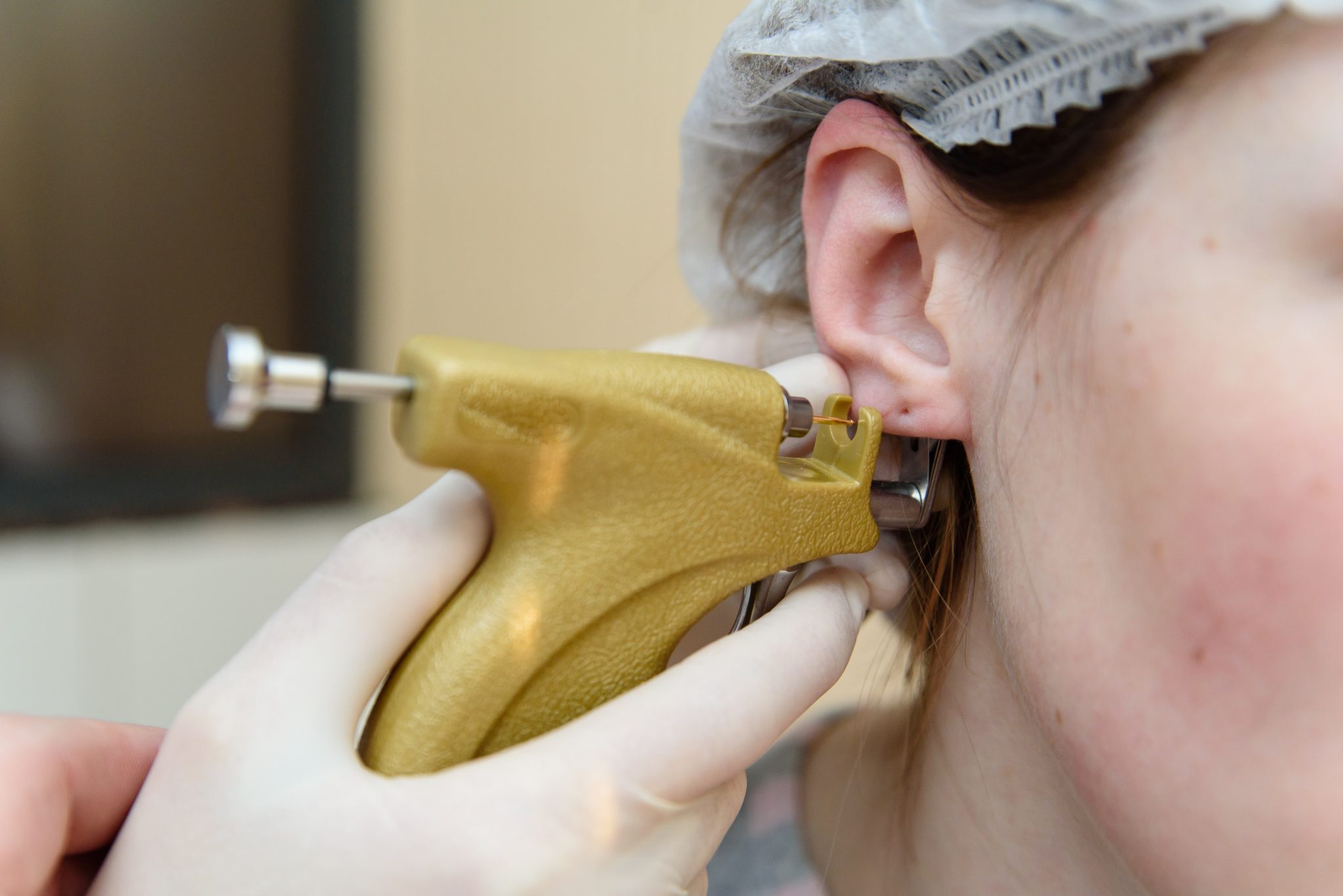
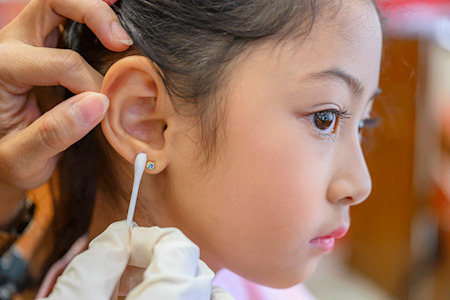
Benefits of Professional Ear Piercing
Professional ear piercing with suitable equipment and appropriate hygiene practices can help reduce avoidable risks.
Potential benefits include:
- A planned and carefully performed piercing.
- Appropriate attention to hygiene.
- Guidance on selecting suitable jewellery.
- Instructions for cleaning and caring for the piercing.
- Advice on when to seek medical attention if healing problems occur.
No piercing procedure is completely risk-free. Infection, metal allergy, irritation, scarring and delayed healing can occur.
Ear Piercing for Adults and Children
Ear piercing may be considered for adults and children, but the appropriate approach depends on age, individual circumstances and the service available at the clinic.
For children, parents or guardians should discuss the procedure, hygiene measures, jewellery and aftercare requirements before booking. Babies and young children require particular consideration because they may touch the piercing or have difficulty following aftercare instructions.
If you or your child have a history of keloid scars, nickel allergy, skin infection or problems with wound healing, mention this before the procedure.
What Happens During an Ear Piercing Appointment?
The process may vary depending on the piercing method and clinic protocol. Before proceeding, ask about:
- Preparation: How the ear and piercing site are assessed and prepared.
- Equipment: Whether the equipment is single-use or appropriately sterilised.
- Jewellery: Which materials are available and suitable for your skin.
- Procedure: What to expect during the piercing and what discomfort may occur.
- Aftercare: How to clean the area, protect the piercing and recognise warning signs.
The exact procedure should be explained by the provider before treatment begins.
Ear Piercing Aftercare
Proper aftercare is important because a new piercing is a healing wound.
- Wash your hands before touching the piercing.
- Follow the clinic's cleaning instructions.
- Clean the area gently with a suitable product recommended by your healthcare professional.
- Avoid unnecessary touching, pulling or twisting of the jewellery.
- Avoid harsh cleaning products that can irritate healing skin.
- Do not change the initial jewellery until it is appropriate to do so based on healing and professional guidance.
- Watch for increasing pain, swelling, warmth, redness or discharge.
If you suspect an infection, seek medical advice. Do not remove jewellery from a potentially infected piercing without guidance from a healthcare professional. Cartilage piercings with significant pain, redness or swelling need prompt medical assessment because complications can be more serious.
When Should You Seek Medical Advice?
Contact a healthcare professional if the pierced area develops worsening pain, significant swelling, increasing warmth, spreading redness, pus or fever. A piercing that appears embedded in the skin or a painful, swollen cartilage piercing also needs prompt evaluation.
Early assessment can help identify infection, an allergic reaction or another healing complication.
Book Ear Piercing in Mira Road
If you are searching for ear piercing in Mira Road or Mumbai, contact SkinHealth Clinic to confirm the available service, suitable age requirements, procedure details and appointment timings.
Call the clinic to enquire about ear piercing availability and book an appointment.